
Yard Drainage & Standing Water Solutions in Chester County & the Main Line
A lawn that turns to mud after every rain is not just a nuisance; it kills grass, ruins beds, and works water toward your foundation. Across West Chester, Chester County, and the Main Line we solve standing-water problems at the source. With roughly 46 inches of rain a year falling on tight clay soils, surface water has nowhere to go on its own. We diagnose where the water comes from, then regrade, channel, and collect it so your yard finally drains and dries.
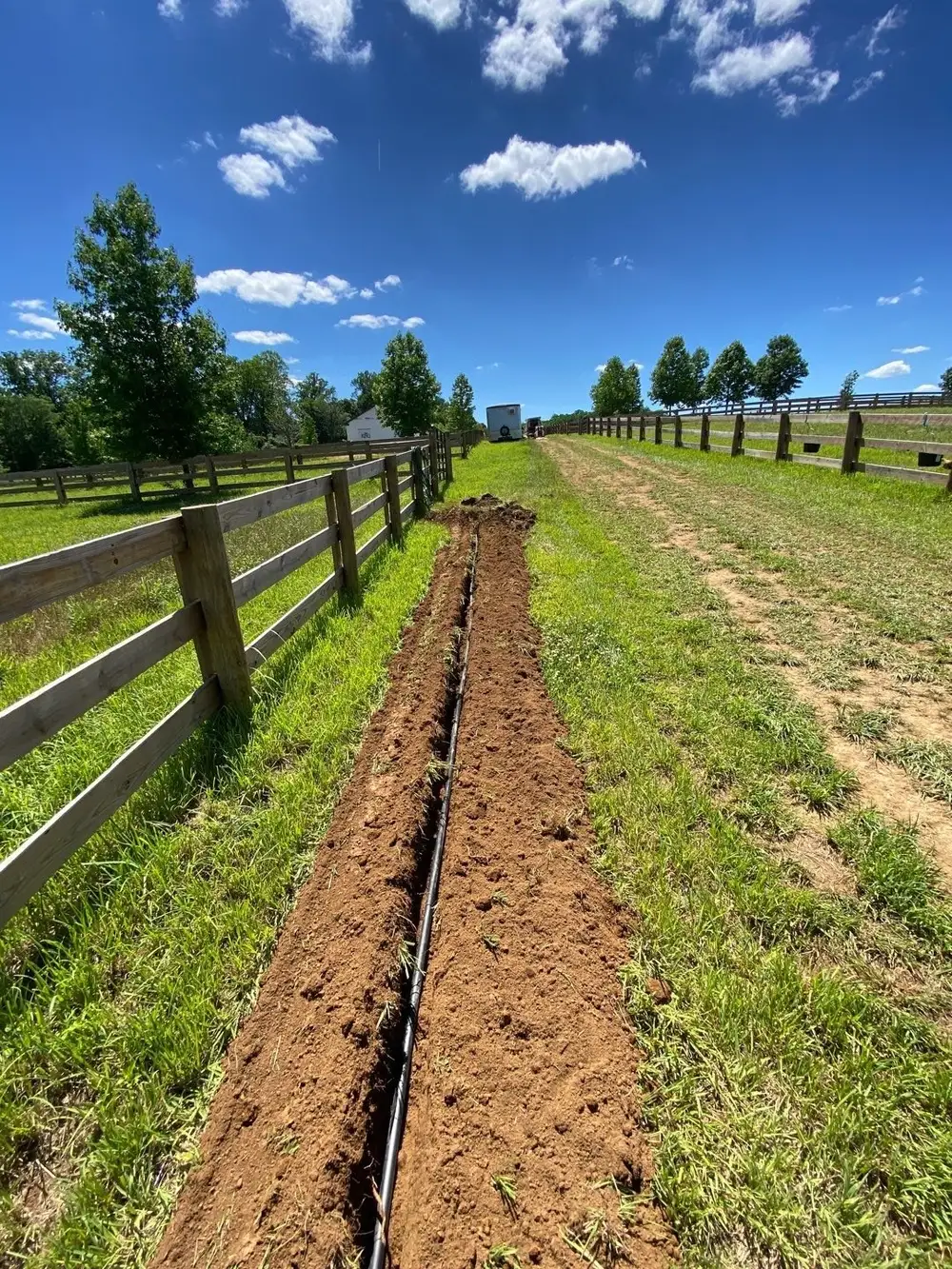
Diagnosing Where the Water Is Coming From
Fixing standing water starts with finding its source, because the wrong fix in the wrong place just moves the puddle. Surface water sitting on top of the lawn is a different problem from groundwater seeping up from below, and they call for different solutions. We read the grade, track where runoff sheets across the property, and check what the neighboring lots and downspouts are contributing before we recommend anything.
- Low spots and bowls where water collects and lingers after rain
- Runoff sheeting downhill from neighboring property or higher ground
- Roof and downspout water dumping onto the lawn near the house
- Compacted clay soil that simply will not absorb the volume it gets
Solutions for Soggy Lawns and Low Spots
Once we know the source, we match the fix to it. Surface-water problems are usually solved by getting the water moving across the yard and giving it a place to collect and exit, rather than letting it pond on flat, slow-draining clay.
Surface swales and regrading
A swale is a shallow, shaped channel that guides surface runoff along a deliberate path instead of letting it pool. Paired with regrading to remove low spots and re-establish positive fall away from the house, swales handle a large share of the soggy-lawn problems we see. Often this is the most effective and least intrusive fix: we reshape the ground so water leaves on its own.
Catch basins, area drains, and dry wells
Where water collects in a spot that cannot be graded away, we set a catch basin or area drain at the low point and pipe it to a proper outlet. On lots without a place to daylight, that outlet is a dry well, an underground gravel chamber that holds the water and lets it disperse slowly into the surrounding soil. We size the system to the volume and route it to comply with township stormwater rules.
Why a Lawn That Won't Dry Out Needs the Right Fix
When a lawn stays wet for days, the cause is usually some combination of flat grade, compacted clay, and water arriving faster than the soil can take it. Throwing a single drain at it rarely works, because the real problem is how water moves across the whole property. We treat yard drainage as a system: collect the surface water, route it with swales and grade, and give it a verified place to go.
Getting it right matters beyond a green lawn. Chronic surface water migrates toward the foundation, undermines patios and walkways, and accelerates erosion on slopes. Solving it once, with the right combination of regrading, swales, and collection, protects the rest of the property and keeps the yard usable through our wet seasons and freeze-thaw winters.
Frequently Asked Questions
Why won't my lawn dry out after it rains? Usually a mix of flat grade, compacted clay soil, and water arriving faster than the ground can absorb it, sometimes worsened by downspouts or runoff from higher lots. Our clay soils hold water near the surface, so without positive grade and a way to move the runoff, it just sits. We diagnose which factors are at play before recommending a fix.
What's the difference between a swale and a French drain? A swale is a shallow surface channel that guides water running on top of the ground, ideal for surface runoff and low spots. A French drain is a buried perforated pipe in gravel that collects water moving through the soil. Surface-water problems often need a swale and regrading; subsurface water needs a French drain. We use whichever the diagnosis calls for.
Will regrading alone fix standing water? Sometimes, yes. If the issue is a low spot or lack of fall away from the house, reshaping the grade can solve it without any pipe. Other times we pair regrading with swales, a catch basin, or a dry well. We recommend the least intrusive solution that actually moves your water.
Where does collected yard water go? To a proper outlet, either daylight on lower ground or a dry well that disperses it into the soil where daylight is not available. We size the outlet to the volume your yard produces and route everything to comply with your township's stormwater rules.
Related design services: Drainage & Grading · French Drain Installation · Grading & Regrading.
Areas We Serve
- West Chester, PA — Standing-water and soggy-lawn solutions for flat, clay-soil borough and township yards
- Newtown Square & the Main Line — Swales, catch basins, and regrading for runoff-prone Main Line properties
- Malvern, Exton, Downingtown, Chadds Ford — served towns
Ready to start? Request a consultation or call (610) 422-3474.
About JHL Landscape Design
JHL Landscape Design is a design-build landscape company serving Chester County, Delaware County and the Main Line from West Chester (701 S Franklin St). We design, install, and care for complete landscapes — landscape design and 3D rendering, hardscape and patios, drainage and grading, and plantings — with every project grounded in a plan you approve before work begins.
PA HIC #PA035784 | ICPI Certified | HBA Member — Chester & Delaware Counties | BBB A+ | 20+ Years Chester County
JHL Landscape Design | PA HIC #PA035784 | ICPI Certified | Licensed & Insured 701 S Franklin St, West Chester, PA 19382 (610) 422-3474
Ready to Start Your Project?
Schedule a free design consultation with JHL Landscape Design.
Schedule a Design Consultation