
Downspout Drainage & Extensions in Chester County & the Main Line
Your roof sheds an enormous volume of water in a storm, and your downspouts decide where it goes. When they dump it right at the foundation, that water finds its way into basements and works against your footings. Across West Chester, Chester County, and the Main Line we bury downspout extensions and tie them into proper outlets so roof water is carried well clear of the house. With roughly 46 inches of rain a year on clay soil, where the downspouts discharge is one of the most important drainage decisions on the property.
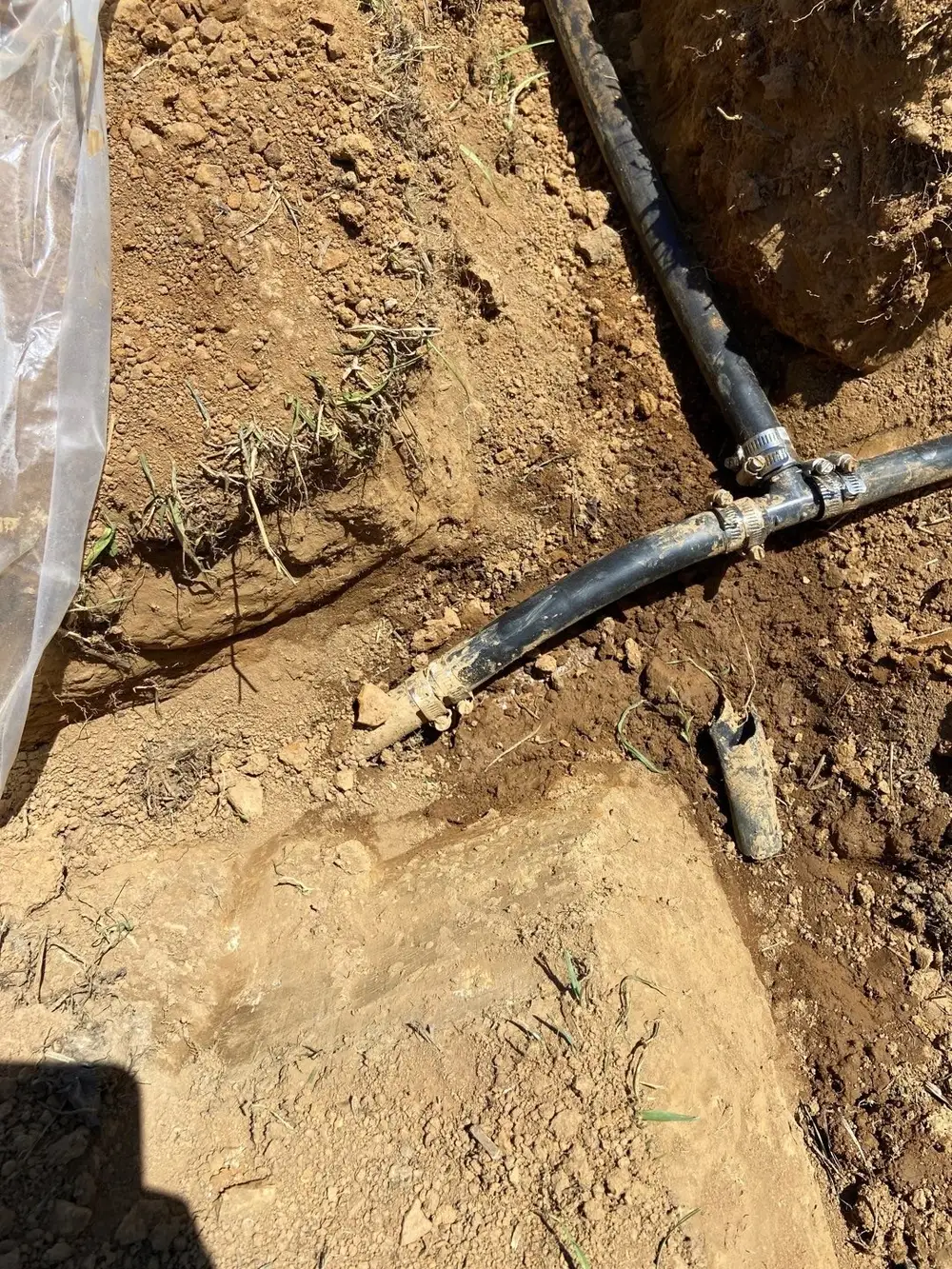
Why Downspouts at the Foundation Cause Problems
A downspout that ends a foot from the house concentrates hundreds of gallons against the foundation with every storm. In our clay soils, that water saturates the backfill, builds hydrostatic pressure against the foundation wall, and follows the path of least resistance into the basement. Over time it also erodes the soil at the corners of the house and contributes to settlement. The splash block or short extension most homes come with simply cannot move that volume far enough away.
- Wet or leaking basements after heavy rain
- Eroded, sunken soil at the foundation corners
- Mulch and soil washing out of beds below the downspouts
- Settlement and cracking traced back to chronically saturated backfill
How We Carry Roof Water Away
The fix is to capture the water at each downspout and pipe it underground to a point well away from the house, where it can discharge safely. We bury the extension below grade so it is out of sight and out of the mower's way, then choose the discharge method that fits the lot's fall and soil.
Buried extensions and pop-up emitters
On most properties we run solid pipe from the downspout to a pop-up emitter set in a lower part of the lawn. When water flows through, the emitter lid lifts and releases it onto the grass safely away from the foundation, then settles flush so it is invisible and mower-safe between storms. It is a clean, durable way to discharge roof water where the grade allows.
Tie-ins to a drain line or dry well
Where there is no good place to daylight, we tie the downspouts into a larger drain line or a properly sized dry well that holds the volume and disperses it into the soil. We size and route every outlet to handle a real storm and to comply with township stormwater rules, rather than just relocating the problem a few feet over.
Integrating Downspouts with Yard and French Drains
Downspout drainage works best as part of the property's overall water plan, not as an afterthought. On many of our projects, roof water is the single largest input, so we coordinate it with the rest of the system from the start.
When we are already correcting a wet yard or installing a French drain, we keep roof water on its own dedicated solid pipe so the clean, high-volume roof flow does not overload the perforated drains meant for groundwater. Tied together correctly, the downspout lines, surface drainage, and any French drains move water through the property as one designed system, protecting the foundation and the lawn through our wet seasons and freeze-thaw winters.
Frequently Asked Questions
How far from the house should downspout water discharge? Far enough that it can no longer migrate back into the foundation backfill, which means well beyond the splash zone most homes are built with. The exact distance depends on your grade and soil; we route buried extensions to a discharge point where the water leaves the house behind for good.
What is a pop-up emitter? It is a discharge fitting at the end of a buried downspout line. When water flows, the spring-loaded lid pops up and releases it onto the lawn away from the foundation; between storms it sits flush with the grass, so it stays out of sight and is safe to mow over. It is our go-to outlet where the lot has enough fall to daylight.
Can I tie downspouts into my French drain? Not into the same perforated pipe. Roof water is clean and high-volume and should run on its own solid line so it does not overload a French drain meant to collect groundwater. We do integrate the two as one coordinated system, just on separate lines routed to the right outlets.
Will burying my downspouts help my wet basement? Very often, yes. Downspouts dumping at the foundation are one of the most common causes of basement water in our area. Carrying that roof water well away from the house removes a major source of the saturation and pressure that drives water inside. We assess whether it is the main culprit on your property.
Related design services: Drainage & Grading · Foundation Drainage · French Drain Installation.
Areas We Serve
- West Chester, PA — Buried downspout extensions and pop-up emitters to keep roof water off clay-soil foundations
- Newtown Square & the Main Line — Downspout tie-ins and drain integration for Main Line homes with wet basements
- Malvern, Exton, Downingtown, Chadds Ford — served towns
Ready to start? Request a consultation or call (610) 422-3474.
About JHL Landscape Design
JHL Landscape Design is a design-build landscape company serving Chester County, Delaware County and the Main Line from West Chester (701 S Franklin St). We design, install, and care for complete landscapes — landscape design and 3D rendering, hardscape and patios, drainage and grading, and plantings — with every project grounded in a plan you approve before work begins.
PA HIC #PA035784 | ICPI Certified | HBA Member — Chester & Delaware Counties | BBB A+ | 20+ Years Chester County
JHL Landscape Design | PA HIC #PA035784 | ICPI Certified | Licensed & Insured 701 S Franklin St, West Chester, PA 19382 (610) 422-3474
Ready to Start Your Project?
Schedule a free design consultation with JHL Landscape Design.
Schedule a Design Consultation